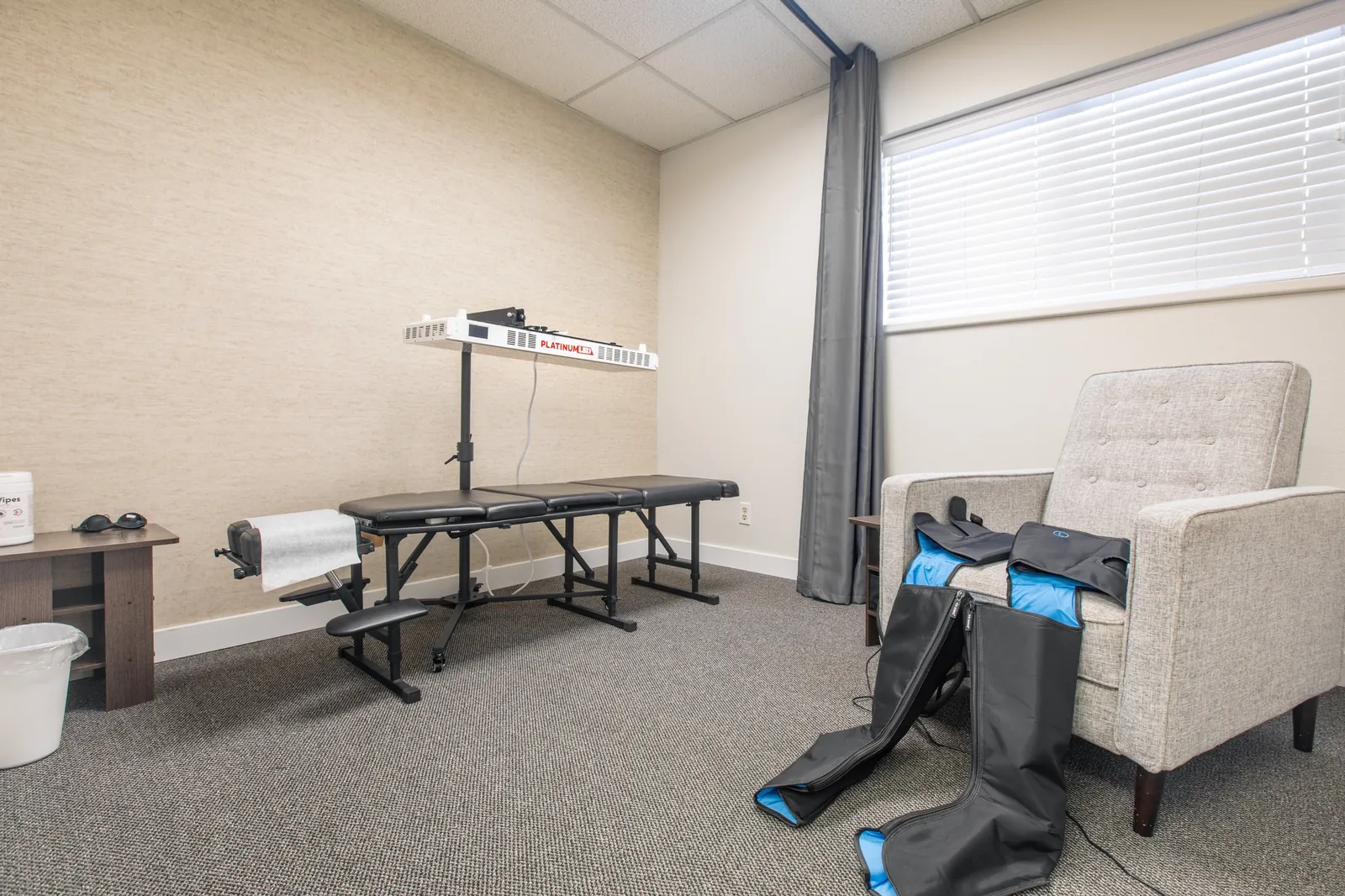
Red light and near-infraredRed Light and Near-Infrared Therapy in Pleasant Grove, UT
Targeted light therapy for sore muscles, stiff joints, and tired tendons, aimed at the spot that needs it and built into your care plan.
Book it on its own, or add it to a visit.
- About 10 minutesAimed at the area that hurts
- No needlesPainless, with no downtime
- On its own or addedBook it alone or with your visit
- One doctorYou see Dr. K every visit
Two kinds of light, one treatment
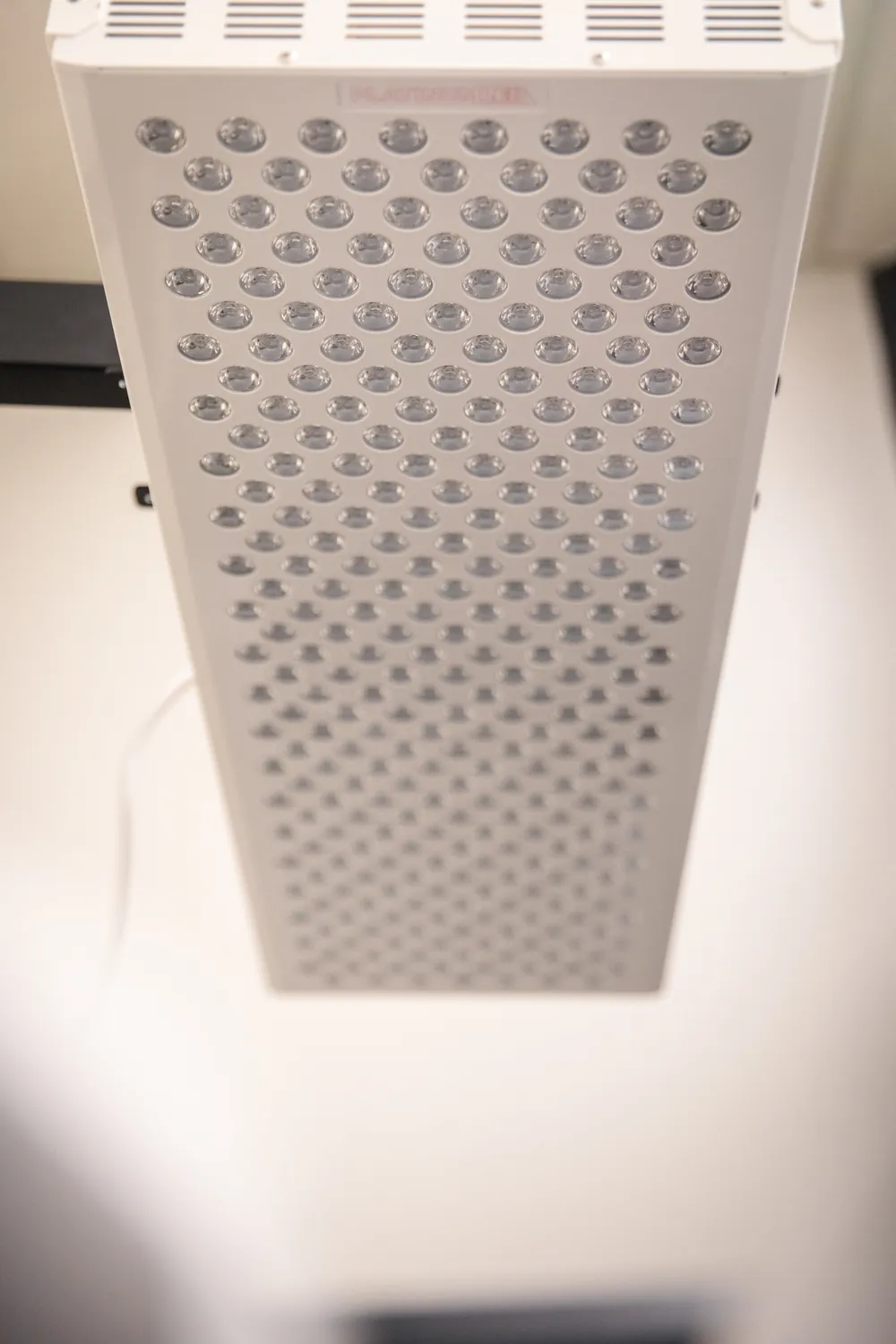
Red light therapy and near-infrared therapy are two parts of the same treatment, often called photobiomodulation. A panel of LEDs shines low-level light on the skin over a sore area. It does not heat or cut anything.
Red light is the visible glow, and it works closer to the surface. Near-infrared is invisible and travels deeper, toward muscle and joints. Using both is why a panel can be useful for more than skin-deep soreness.
Think of it as a supporting treatment. It works best alongside your adjustments, soft tissue work, and rehab plan, not as a cure on its own.
How this compares to a home device
Plenty of people own a red light device, and some of them are good. They are not all the same, though. Here is what actually matters.
Power and coverage
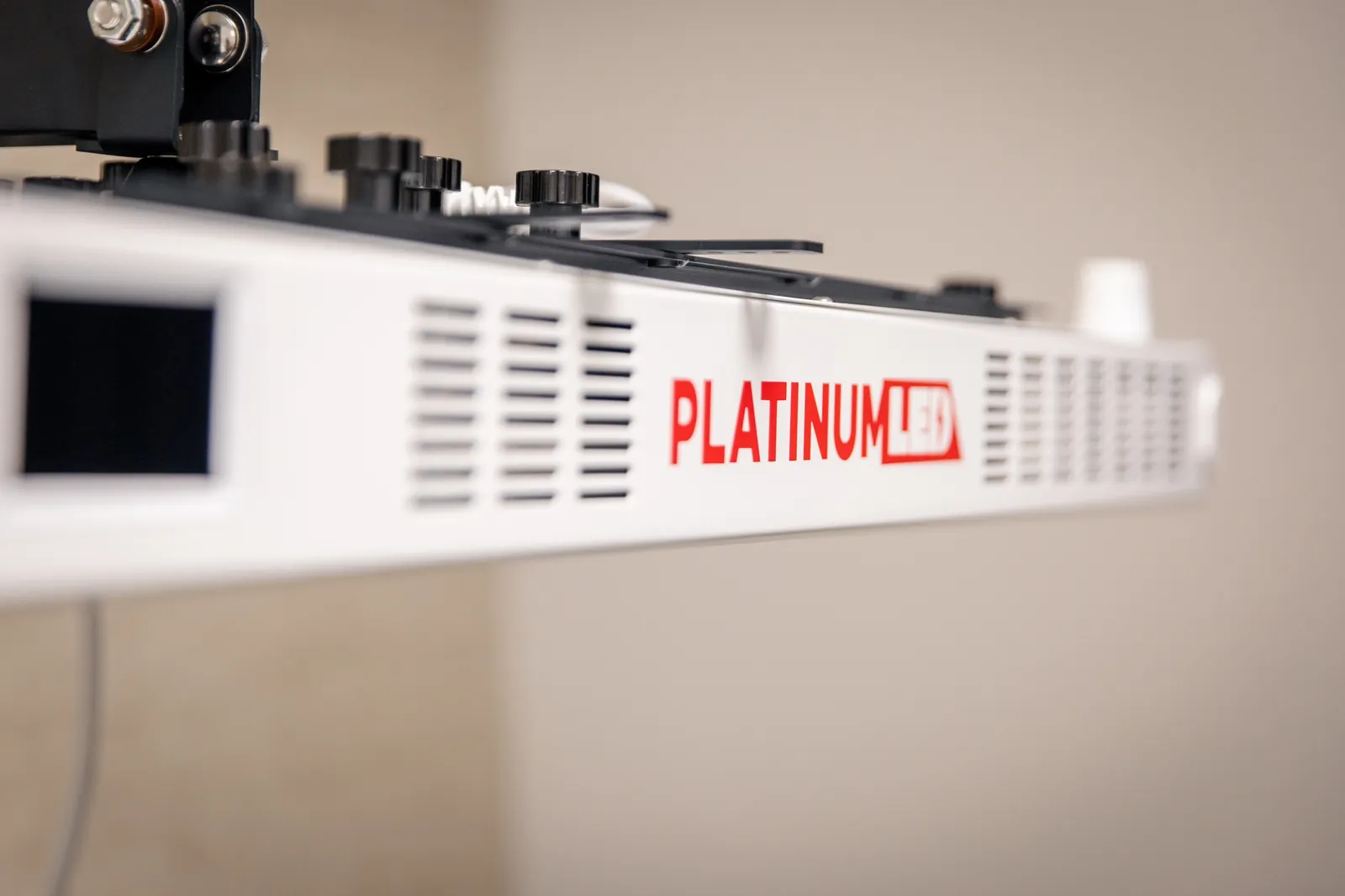
A small lamp or mask covers a small area. A full-size panel covers a larger area at a higher output.
Aim, distance, and time
Results depend on how close the light is and how long it is used. I set both for the area I am treating.
The plan around it
Light therapy helps most as part of a plan. Here it comes after an exam, alongside the rest of your care.
If you already own a good panel, I will tell you honestly what you may not need from me.
Common reasons people add light therapy
Research on light therapy is promising for some uses and mixed for others. These are the reasons I use it most.
Muscle soreness and recovery
After hard workouts, long training weeks, and sore, tired days.
Stiff, tight muscles
Sore tight spots, and a good pairing with soft tissue work.
Tendon and joint pain
A supporting treatment alongside shockwave and rehab for stubborn tendon and joint soreness.
Recovery after an injury or accident
A gentle add-on during recovery from a sprain, strain, or auto accident.
What a session looks like
Find the right spot
I examine you first, so the light goes where it can help, not just where it hurts.
About 10 minutes of light
You relax while the panel is aimed at the sore area. Most people feel gentle warmth, or nothing at all.
Back to your day
No downtime. It is often part of the same visit as your adjustment, soft tissue work, or shockwave.
Light therapy and the rest of your care
Red light is included in Active Care and Full Recovery. It can also be added to an Essentials visit, or booked on its own. Your first consultation is free, and you only pay if you receive treatment.
Red light and near-infrared therapy FAQ
What is red light and near-infrared therapy?
Red light and near-infrared therapy are two parts of the same treatment, often called photobiomodulation. A panel of LEDs shines low-level red and near-infrared light on the skin over a sore area. Red light is visible and works closer to the surface. Near-infrared is invisible and travels deeper into muscle and joints. It is used as a supporting treatment for soreness, stiffness, and recovery.
Is this different from the red light device I have at home?
It can be. Home devices range from small lamps and masks to large panels, and they are not all the same. What matters is the wavelengths, the power, how close the light is held, and how long you use it. I use a full-size PlatinumLED BIOMAX 900 panel, and I aim it at the area that needs it as part of your plan. If you already own a good panel, I will tell you honestly what you may not need me for.
What does red light therapy help with?
Light therapy is used for muscle soreness and recovery, stiff and tight muscles, and tendon and joint pain. Research on it is promising for some uses and mixed for others, so I treat it as a supporting treatment alongside your adjustment, soft tissue work, and rehab, not a cure on its own. I will tell you honestly what I expect it to do for your problem.
Does red light therapy hurt?
No. Most people feel gentle warmth or nothing at all. There are no needles and no downtime, and you can go about your day right after.
How long is a red light session?
A session is about 10 minutes with the panel aimed at the sore area. If you are also getting an adjustment or other care, it is part of the same visit.
How many red light sessions will I need?
Light therapy tends to work best with repeated sessions over time, not a single visit. After your exam I will tell you what makes sense for your problem and adjust the plan as you respond.
Can I book red light therapy on its own?
Yes. You can book a red light visit on its own, add it to an Essentials visit, or get it included in Active Care and Full Recovery. You do not need an adjustment to use it.
Should I get red light therapy or shockwave?
They do different jobs. Shockwave is aimed at stubborn tendon and soft tissue pain that has stalled. Light therapy is gentler and works as a supporting treatment for soreness, stiffness, and recovery. Many people use both, and Full Recovery includes them together when it is clinically directed.
Who should not use red light therapy?
Light therapy is not right for everyone. I go over your history first. Medications that make skin sensitive to light, certain skin conditions, active cancer in the treatment area, pregnancy over the abdomen, and eye safety are things I check, and I will tell you honestly if it is not a fit.
Is red light therapy covered by insurance?
Care at Kinetic Chiropractic is cash pay, so there is no insurance paperwork. We can provide a superbill if you want to submit for reimbursement on your own.
How much does red light therapy cost?
Red light is included in Active Care and Full Recovery, can be added to an Essentials visit, and can be booked on its own. Your first consultation is free, and you only pay if you receive treatment. Our pricing page shows the details.
Where do I go for red light therapy in Pleasant Grove?
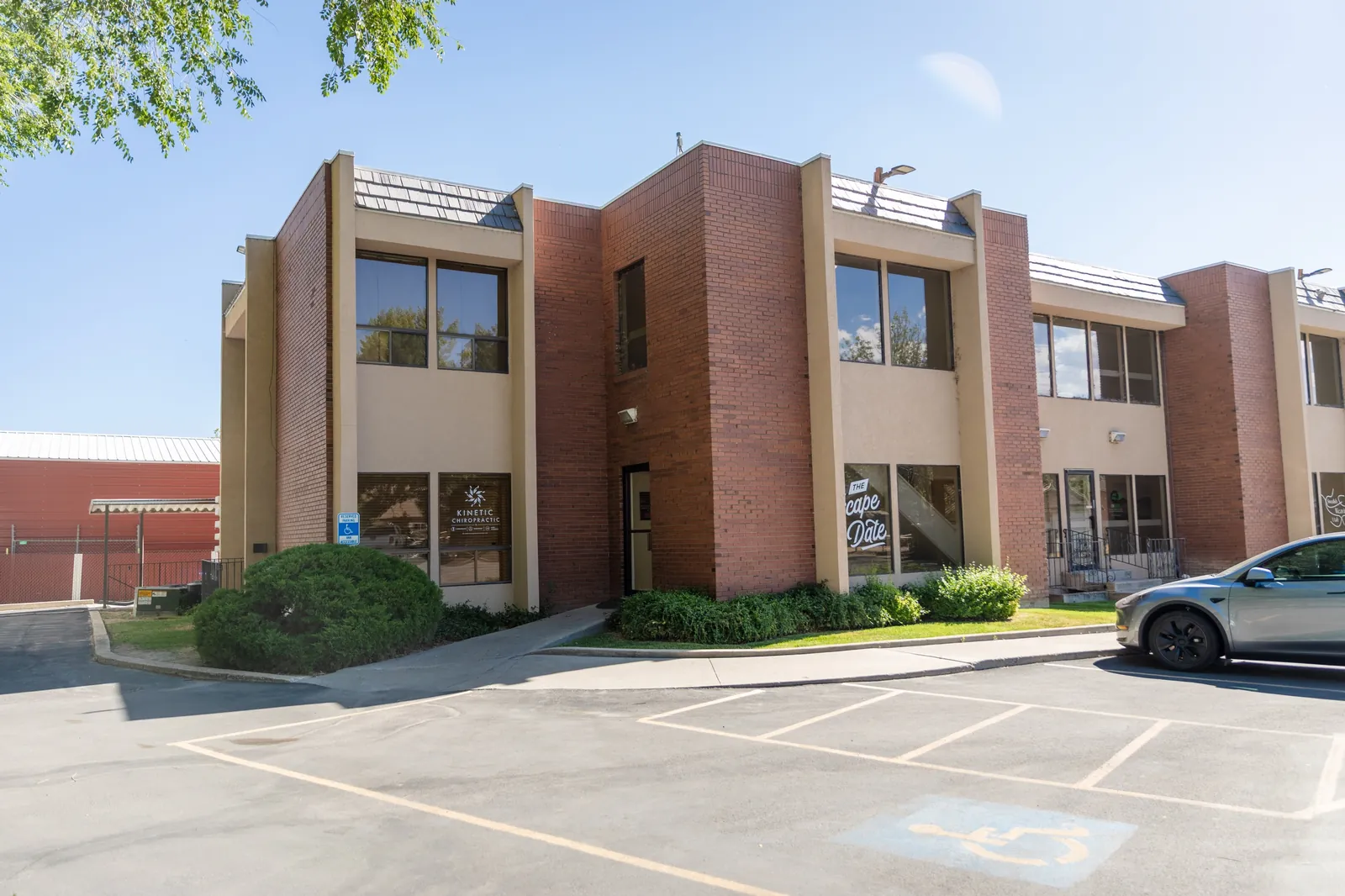
We are at 405 S 100 E, Unit 104 in Pleasant Grove, near Purple Turtle. Book online, or call 385-256-0603 and we will help you get scheduled.
More about our care
Near Purple Turtle in Pleasant Grove
Serving patients from Highland, Cedar Hills, Alpine, and across Utah County.
- Pleasant Grove
- Lindon
- Orem
- American Fork
- Lehi
- Highland
- Cedar Hills
- Alpine
- Provo
405 S 100 E, Unit 104, Pleasant Grove, UT 84062
Mon-Fri, 9am-5pm
385-256-0603 · dr.k@kineticchiropracticutah.com
Ready to give your body some help recovering?
Book a red light visit, or add it to your next appointment.